The replica Nautilus game changes at the 5810/1G-001. With the 5711, the argument was mostly about blue-dial shade and case proportions. With the 5712, it was about whether the 240-style movement could actually deliver a working power reserve and correct sub-dial layout. The 5810 is different. Patek Philippe took the Nautilus back to its 1976 roots with a two-piece case, no date, no seconds hand, and a 6.9mm profile. That is a structural decision, not a dial decision. And that is exactly where PPF’s version becomes interesting: the front is likely to be PPF’s kind of fight, while the side profile and the display back are where the honest conversation starts.
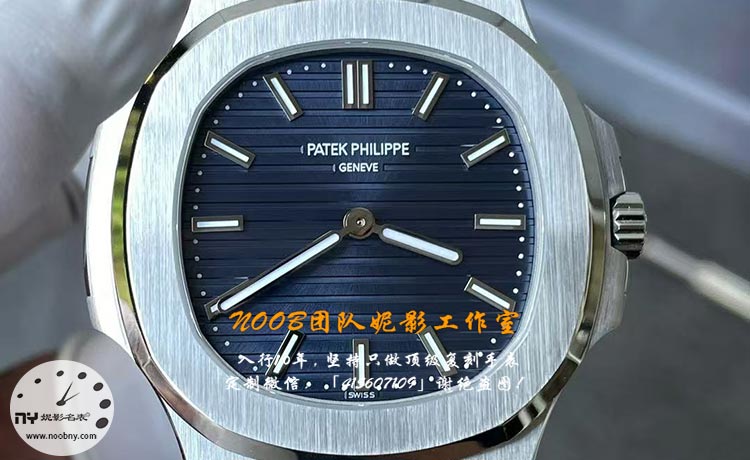
Where PPF actually stands in the Nautilus replica scene
PPF is not a factory that tries to do everything. Its reputation in the Nautilus space was built on two things: dial colour work and bracelet fit. The 5711 generation earned PPF a following because its grey-blue and blue-black tones were considered by many owners to be closer to the genuine article than some rival versions, especially in the way the dial shifted under different light. The 5712 V3 moved the game forward with a Shanghai-based 240-style integrated movement, a correct balance wheel position, a real power reserve, and laser-engraved movement text instead of printed lettering. PPF also switched the clasp from a single-push deployant to a double-push butterfly clasp, which made daily use noticeably better.
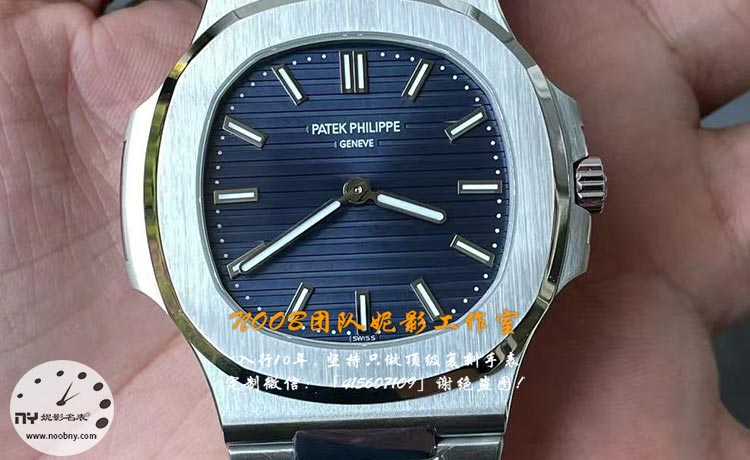
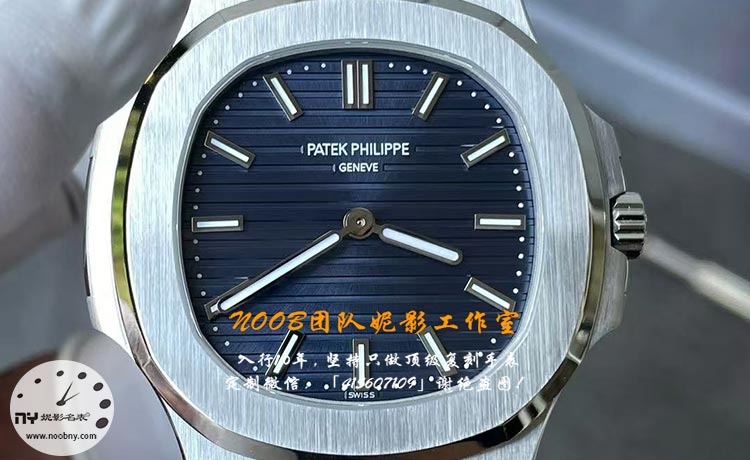
Those two strengths line up well with the 5810. The 50th anniversary dial has no date window and no seconds hand to distract the eye. It is one clean sheet of blue sunburst with horizontal embossing, and everything is visible: how cleanly the gradient falls into black at the edges, how the horizontal ridges catch the light, whether the blue shifts too warm or too cool outdoors. This is not a dial that hides mistakes. But it is also not a dial PPF has to invent from scratch. On the wrist, at normal viewing distance, PPF’s 5810 has a real chance of being one of the more convincing 5810 dials available, provided the real-life colour temperature stays within the range PPF has managed on its better blue Nautilus dials.
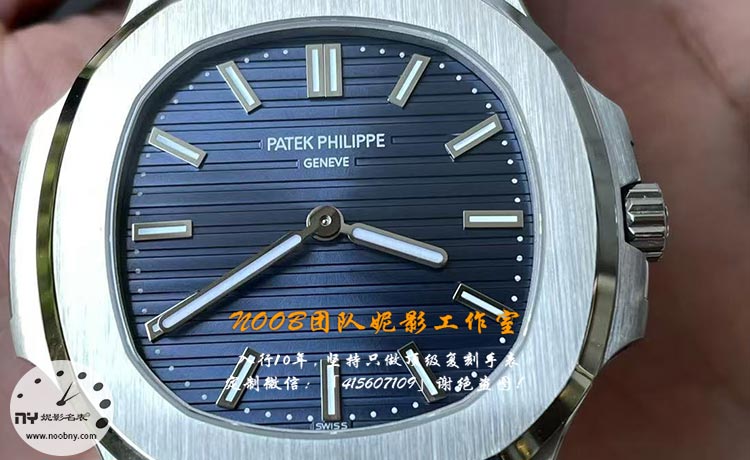
The case: the look is doable, the 6.9mm is not
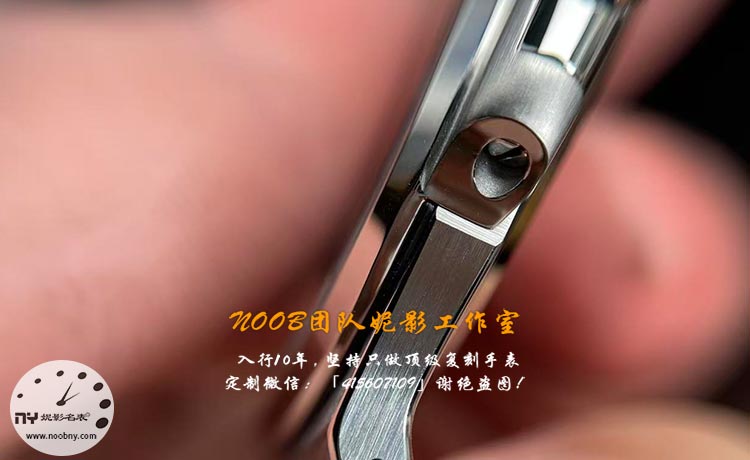
The 41mm octagonal porthole outline, the alternating polished and brushed surfaces, and the integrated bracelet are all familiar ground for PPF. The 5711 and 5712 V3 already showed that PPF can get the bracelet to sit vertically against the wrist, and the brushing-to-polish transitions are cleaner than they were on earlier versions. The 5810 continues that language, and on the wrist it should feel light and sharp.But the 5810 case is not just a 5711 case with a new dial. The genuine watch uses a two-piece case: no separate caseback, the case middle connects directly to the bezel, and four screws hold the bezel assembly. That is a deliberate return to Genta’s original Nautilus construction, and it is a big part of how Patek got the watch down to 6.9mm. For reference, the 5811 is about 8.2mm and the 5711 about 8.3mm. The 5810 is roughly 1.3 to 1.4mm thinner than both.
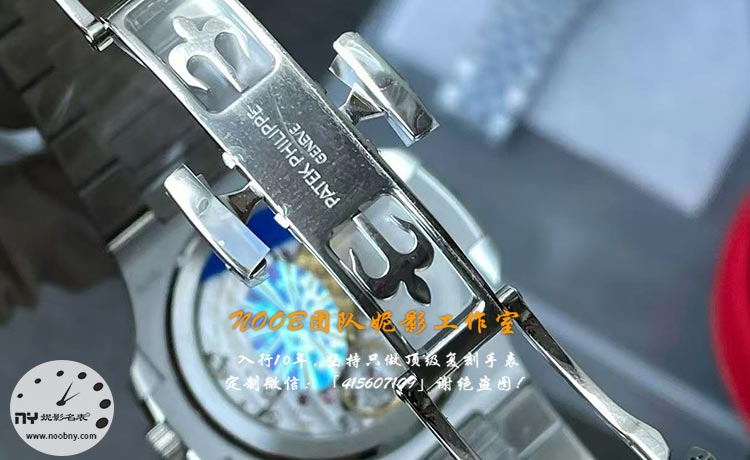
PPF’s current Nautilus case architecture was developed around the 5711/5712 platform. The 5711 V3 measures around 8.6mm in real-world checks, which is already close to the practical floor of that case system. If PPF puts the 5810 dial and bracelet into its existing case construction, the realistic expectation is a watch north of 8mm, not 6.9mm. That does not ruin the front view. At social distance, the PPF 5810 can look convincing. But the moment the case slides under a cuff, or someone looks at the watch from the side and compares the bezel-to-case-middle thickness ratio, the gap becomes obvious. The 5810’s whole personality is built on that thin line. A replica can copy the outline; it cannot copy the structural subtraction that created the outline.The clasp is a smaller but practical point. If PPF carries over the double-push butterfly clasp from the 5712 V3, daily opening and closing will feel solid and smooth. The genuine watch uses a white-gold folding clasp with a micro-adjust system. On a replica, that will be steel, not white gold. That is not a scandal at this price point, but it should not be dressed up as something else either.
The dial: this is where PPF should win
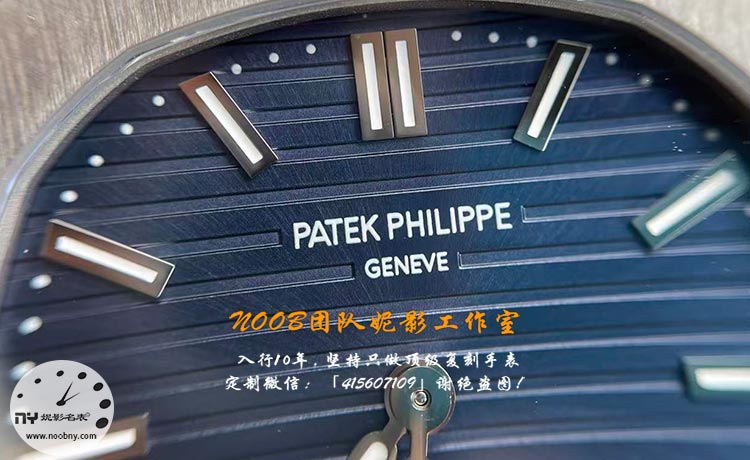
The blue sunburst dial with horizontal embossing is the heart of the 5810’s front view. The applied baton hour markers and rounded baton hands are familiar Nautilus elements, and the white lume coating is standard work for PPF at this stage. The real test is not whether the markers are applied or whether the lume is present. The test is the blue.Genuine 5810 dials read dark and deep in low light, then release the sunburst effect under stronger light. If the replica dial shifts too far toward purple, too grey, or too flat, the whole front view collapses. PPF’s better blue Nautilus dials have shown that the factory understands this balance. The 5810’s no-date, no-seconds layout puts even more pressure on the colour and the horizontal texture, because there is nothing else to look at. But that is also why PPF is a sensible starting point for this reference. The front is the part PPF has the best chance of getting right.
The movement: the rotor engraving and the finishing are the second reality check
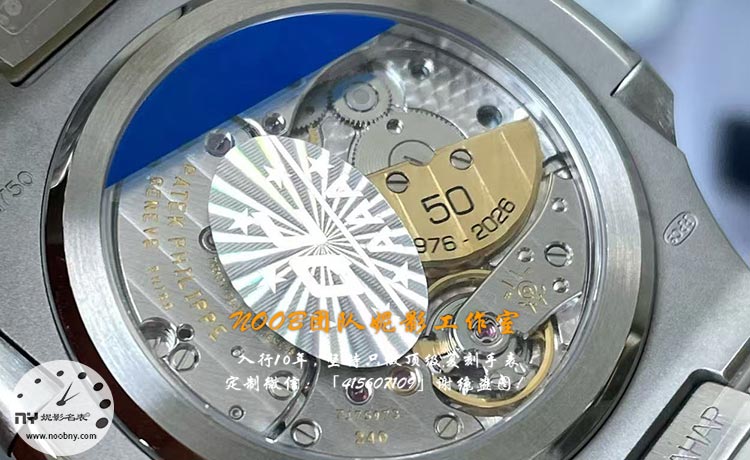
The genuine 5810 runs the Cal.240, a 2.53mm-thin automatic movement with an off-centre mini-rotor. On the 50th anniversary model, the 22K gold rotor is engraved with “50 1976–2026,” and the movement is finished to Patek Philippe Seal standards, with fish-scale patterning on the bridges and Geneva stripes. Through the sapphire caseback, that is a big part of the watch’s identity.PPF’s 240-style integrated movement in the 5712 V3 has a correct balance wheel position, a working power reserve, and laser-engraved text that looks more three-dimensional than the earlier printed versions. That gives PPF a usable base. But the 5810’s rotor engraving is a model-specific detail. If PPF simply takes a generic 240-style rotor and adds a line of text, the watch will pass at arm’s length and fail under close inspection. The depth of the engraving, the proportions of the numerals, and the colour tone of the rotor are all part of the illusion. The same goes for the bridge finishing. Genuine Patek finishing has a density and consistency that replica finishing rarely matches under a loupe. PPF can deliver the visual framework of a micro-rotor, a 48-hour power reserve, and an anniversary engraving. It cannot deliver the hand-finishing density behind the Patek Philippe Seal.The verdict:The PPF 5810/1G-001 is a focused watch. It uses PPF’s strongest cards, the blue dial and the Nautilus bracelet, to take on the 50th anniversary model’s clean two-hand, no-date front view. If the goal is a daily-wear Nautilus with a convincing dial, a comfortable bracelet, and a movement that looks the part through the back, PPF’s version deserves a serious look. The front is where PPF earns its keep.
But the 5810 is not really a front-view watch. Its identity is the 6.9mm case, made possible by the two-piece construction and the Cal.240. That is a structural subtraction, and replica factories are usually better at addition than subtraction. PPF can make the 5810 look right from the front. It cannot give you the genuine watch’s 6.9mm side profile. That single number separates the PPF 5810 from the real thing more honestly than any dial shade ever will.

扫一扫,添加好友